
Confident, Calm & Clutch
Car Ride Conversations for Sports Families Podcast
Quick, impactful talks to fuel mental toughness on the go.
About the Show
Welcome to Car Ride Conversations for Sports Families – the ultimate podcast for parents, coaches, and young athletes who want to unlock the secrets to mental toughness, confidence, and resilience. Whether you're on your way to practice, a big game, or just tackling the daily grind, these bite-sized episodes are designed to spark meaningful conversations and equip young athletes with actionable tools to thrive in school, sports and life.
Hosted by Valerie Alston, former D1 athlete, sport psychology expert, and resilience coach, each episode dives into key topics like building self-belief, staying calm under pressure, and bouncing back from setbacks. With real-life stories, practical tips, and relatable insights, you'll discover how to support your athlete's journey while strengthening your connection along the way.
Buckle up and join us for a ride full of inspiration, growth, and the skills needed to become Confident, Calm, and Clutch!
*Conversations are probably best suited for middle school aged children and up, but you can easily adapt questions for younger elementary aged children.
So why a podcast like this?
Here’s the thing: kids today face a lot of pressure. Whether it’s school, sports, or social life, the challenges can feel overwhelming. And as parents, we want to help, but it’s not always easy to know how. What do we say? How do we start?
This is where Car Ride Conversations for Sports Families comes in. Each episode introduces an important topic—like mental toughness, handling pressure, or building resilience. I’ll explain why the topic matters, and then I’ll give you a few simple, open-ended questions to discuss with your athlete.
But there’s another reason this podcast matters so much to me. Back when I was growing up, we didn’t have the kind of technology kids have today. Car rides were where my family and I often had our best conversations. We’d rock out to good music, observe the world around us, and just talk. In particular, the drives to and from sports were some of my favorite times. Playing travel softball often meant 40- to 60-minute drives, and those moments with my dad, talking about strategy, sportsmanship, tactics, and life lessons, became some of my most cherished memories. They were also some of the most meaningful discussions I’ve ever had.
Today’s generation is so often sucked into technology—phones, tablets, and screens—that they’re missing out on these incredible opportunities to grow and connect. This podcast is my way of helping parents and kids reclaim that time. Let’s use car rides to have fun, spark meaningful dialogue, and build the kind of relationships that truly last a lifetime.
.
After Arizona State hockey player Matthew Mayich collapsed during an outdoor workout and remained hospitalized with severe injuries, teammates challenged parts of the university’s account and the head coach was placed on paid administrative leave, prompting a broader discussion about why athletes may fear speaking up. Valerie Alston explains a problem-independent framework for intervention: noticing when something physical, behavioral, or environmental seems off (without diagnosing), owning responsibility despite barriers like the bystander effect, expert bias, or fear of repercussions, and acting with a simple menu of options—directly acknowledge, distract/interrupt, get help, and keep telling if the first adult doesn’t respond. She emphasizes creating psychologically safe environments, helping athletes distinguish hard from harmful, building a “trusted adult bench,” and provides family discussion questions to practice these skills.

Valerie Alston closes a six-week series on the pressure to be elite by reminding families that every athlete eventually plays their last game and that true success includes who athletes become through sport, not only performance outcomes like rankings, scholarships, and trophies. She discusses the risks of tying self-worth solely to athletic identity and encourages athletes to broaden their identity through friends, hobbies, school, and non-sport interests so setbacks like being benched, cut, injured, or not recruited don’t create an identity crisis. Alston reframes “elite” as lasting life skills, resilience, discipline, communication, handling feedback, losing well, leading and following and offers reflection prompts and family conversation questions about what sports has already given, what to carry forward, and what makes sport worthwhile without external rewards.
Mental Toughness in Youth Sports: When to Push Through vs When to Recover (Green/Yellow/Red Signs) Valerie Alston challenges the “do more” mindset in competitive youth sports, explaining that mental toughness includes knowing when pushing harder stops helping and recovery is needed. She distinguishes growth discomfort from depletion, emphasizing that recovery is part of training physically, mentally, and emotionally. Using a personal story of burnout from playing multiple varsity sports plus travel softball, she highlights how overloading can reduce focus and performance. The episode teaches families to recognize signs of fatigue and burnout and introduces a stoplight framework—green (push through), yellow (adjust/caution), red (stop and address)—to build self-awareness and self-regulation. Alston outlines recovery options beyond rest, including sleep, nutrition, lighter sessions, fun activities, and mental breaks, and offers discussion questions to help families evaluate what’s truly helping versus fear of falling behind.
You Can Own the Goal Without Owning the Outcome | Controlling the Controllables Valerie Alston explains that athletes can work hard and still miss desired outcomes like making varsity, earning scholarships, or getting recruited because sports involve other people, limited opportunities, circumstances, and luck. She reframes mental toughness as accurate thinking and forward movement when things don’t go as planned, emphasizing separating desired outcomes from controllable process goals. The episode breaks performance factors into three categories—what you control (effort, preparation, attitude, recovery, grades), what you influence (playing time, recruiting interest, team success), and what you must accept (roster needs, injuries, officiating, others’ talent, coaches’ decisions). Alston discusses attribution and realistic optimism, encourages allowing disappointment without rushing to fix it, and offers a three-question reset: what happened, what’s yours to learn, and what happens next, plus discussion prompts for sports families.
Valerie Alston explores how parents and young athletes can identify who truly owns a sports goal by examining motivation, ownership, and family expectations. She explains how parents can unintentionally carry an athlete’s dream through constant reminders, planning, and recruiting pressure, and contrasts external pressure-driven motivation with internal, personally valued motivation that is more sustainable. The episode encourages parents to support rather than carry the dream, shift age-appropriate responsibility to athletes, and distinguish between temporary dips in motivation and genuine changes in priorities. Alston offers an “ownership check” family exercise and guided conversation questions about goals, willingness to do the work, transferring responsibilities, and how to safely talk if dreams change, concluding with a preview of next week’s topic on handling unmet opportunities despite hard work.

Host Valerie Alston explains how social media changes youth athletes’ comparison habits by encouraging them to measure their real, day-to-day experience against others’ highlight reels, which can hurt motivation and confidence. She reframes comparison as a tool for learning asking “What can I learn from that?” and challenges athletes to focus on becoming great rather than performing for likes and attention. The episode emphasizes building confidence from internal evidence of growth instead of external validation like rankings, playing time, offers, or post engagement. Alston also urges athletes to protect their attention with a “social media audit” (teach/inspire/entertain vs drain) and to track progress using a personal scorecard that includes mental, emotional, and teamwork markers. She closes with family discussion questions and previews next week’s topic: whose dream the goal really is.
The Pressure to Be Elite (Part 1): What Is Youth Sports Supposed to Do for Our Kids? Valerie Alston launches a six-week series, “The Pressure to Be Elite,” exploring how youth sports have become serious earlier through rankings, recruiting, showcases, and constant pursuit of the “next level.” She clarifies the series isn’t anti-competition or anti-big dreams, but examines how chasing “elite” can shift athletes from a growth mindset (“How do I get better?”) to anxiety and comparison (“Am I good enough?”). Alston encourages families to focus on what sport is providing right now—skill growth, teamwork, resilience, confidence, relationships—and to “expand the scoreboard” beyond wins, stats, and roster spots. She challenges parents and athletes to separately answer “Sports are worth doing because…” and compare definitions of success, then use conversation prompts about what elite means, why they play, current benefits, and whether they’re chasing the same goal. Next week focuses on social media.
Valerie Alston discusses why fast-improving athletes learn to use coaching feedback without turning it into an identity statement, explaining that feedback can build confidence when viewed as information rather than a measure of worth. She introduces a growth mindset and attribution theory (internal vs. external, controllable vs. uncontrollable, stable vs. unstable) to help athletes interpret mistakes in ways that support learning, ownership, and future improvement, while noting some errors truly are out of one’s control. The episode encourages responding to feedback with curiosity instead of defensiveness, emphasizing that real confidence comes from competence and how athletes bounce back after tough moments. Parents are coached to normalize correction, show empathy, and ask reflective questions that help athletes process feedback productively, followed by four conversation prompts for families.

Host Valerie Alston continues her conversation with Ricky Scruggs on why many talented athletes struggle in games: they focus on doing things perfectly and on looking like a good player instead of remembering the objective—winning by accomplishing the goal of the sport. Scruggs shares lessons from baseball and motor learning about goal-oriented performance, trusting preparation, and avoiding mechanical overthinking during competition, emphasizing that perfectionism undermines progress and that highlight culture and social media distort expectations. He encourages parents to avoid extremes of overprotection or harsh pressure and instead use sports as a character-building vehicle that also fuels peak performance through purpose, relationships, and resilience. The episode ends with family discussion questions about goals vs. appearance, in-game thoughts, lessons sport teaches beyond mechanics, and how parents can best support healthy development.

Host Valerie Alston welcomes mental skills coach and former baseball player Ricky Scruggs to discuss a healthier approach to competition, identity, and team culture for young athletes and parents. Scruggs shares his path from record-setting hitter to JUCO World Series, Division I at UNLV, and independent ball, then into car sales and ultimately running a baseball academy for nearly 20 years, where he blended biomechanics with a mental skills model. He emphasizes that athletes often tie identity to results, creating pressure, and encourages separating self-worth from performance. Scruggs reframes competition as “seeking together,” aiming to bring out each other’s best, and highlights belonging, mission-focused mindset, collective responsibility, and strong teammates who challenge one another. Valerie closes with family discussion questions on competing with vs against, giving vs getting, healthy internal competition, and valuing relationships over results.
Valerie Alston discusses how athletes and parents can approach upcoming school sport tryouts with a healthier mindset by shifting from “I have to prove myself” to “I get to show myself.” Drawing on conversations with coaches at the North Carolina Coaches Association, she emphasizes focusing on controllables—effort, coachability, communication, body language, hustle, decision-making, and how athletes respond to mistakes—rather than outcomes like roster spots or other players’ talent. She explains that coaches build teams and value character and dependability, offers strategies to reset after errors (breathe, use a cue, refocus), and warns against unhealthy comparison. She recommends defining success with three process goals and using a before/during/after mental plan, plus guidance for parents to reduce pressure and ask curiosity-based questions.
Valerie Alston uses the France–England World Cup third-place match to explore why athletes often play freer once pressure is gone, suggesting fear of failure can lead to playing not to lose, conservative choices, and reduced creativity. She explains how pressure can narrow decision-making and disrupt momentum, and encourages parents and coaches to create psychologically safe environments where mistakes are treated as learning rather than punished. The episode emphasizes staying aggressive, generating momentum through controllables like effort, communication, and celebrating small wins, and adopting a “next play” mindset. Alston provides car-ride conversation prompts for families: when you play your best, what changes under pressure, how momentum shifts, and how you’d play if you weren’t afraid to fail, reinforcing that love and support shouldn’t depend on results.
Host Valerie Alston explains how chaos in sports can overwhelm athletes by maxing out limited cognitive capacity, leading to slower processing, hesitation, rushed decisions, missed cues, and errors. Instead of trying to think more, she teaches listeners to simplify by focusing on “What’s important now?” and “What is my job for the next five seconds?” She shares three practical tools to reduce mental load: narrowing to a single controllable cue (“the win”), grounding in the present with “feet and breath” or a physical anchor, and using a practiced reset routine—release, refocus, respond. She also advises parents and coaches to avoid adding to athletes’ cognitive load with too many instructions, especially for younger kids, and offers a weekly challenge to build a personalized chaos-to-composure plan plus family discussion questions.
Valerie Alston challenges sports families to watch the World Cup by focusing on mindset rather than the ball, using knockout-round moments to teach mental toughness. She highlights how quickly momentum shifts in soccer and the importance of emotional flexibility—responding to the current reality and “playing the score on the scoreboard, not the one in your head.” She explains that pressure doesn’t require rushing, emphasizing deliberate routines and the cue “slow is smooth, smooth is fast.” She also discusses intentional body language after mistakes, composure late in games, and how top teams solve problems together through communication, encouragement, and solution-focused resilience.

Valerie Alston and guest Shelly Howard discuss how sports families can fund college through early, honest conversations about what parents can contribute, whether loans are on the table, and the student’s role in earning merit scholarships. Howard explains four “buckets” of money, notes scholarships can be pursued as early as fourth grade, and emphasizes getting a clear estimate of what colleges expect you to pay using a Student Aid Index (SAI) calculator. She highlights that FAFSA considers not only income but where assets are held, and warns planning should start well before late junior year. The episode stresses that the biggest money can come from choosing the right, more generous college and from students building a strong “resume” of authentic leadership and activities. They offer conversation starters like the “millionaire” game to gauge values and financial literacy, and share resources including books and a 30-minute discovery call at collegereadyplan.info.

Host Valerie Alston continues her conversation with college-planning expert Shelly Howard about helping students move from a future vision to choosing a major and school. They emphasize building confidence by trying real experiences, shadowing jobs, volunteering, and leadership roles, to discover both what students like and what they don’t, while also gathering stories for applications. They discuss balancing passion with practicality, including return on investment and realistic expectations for careers like professional sports or influencing. Howard outlines key admissions factors: rigorous GPA, aligned test scores, meaningful service, extracurricular depth, leadership, recommendations, and a strong essay,and explains how her “College Ready” village reduces stress by providing a roadmap and support for both students and parents. They close with conversation prompts on who leads the process and what type of college environment fits best.
How to Utilize the Podcast
As a Parent:
Simply pick an episode on a topic you are curious about and listen. You can listen to all of the questions first, then have a discussion or you can pause after each individual question to have conversation. Each episode is between 9-15 min so that are quick but hopefully the conversation is not!
As A Coach
Pick a topic you think your team needs to learn about. Have them listen to the episode in some way then you facilitate the conversation at practice in some way. It is highly recommended to involve the parents too!
- Option 1: Have athletes listen to the episode prior to practice (perhaps on the drive to practice so it is fresh), then facilitate the discussion questions at some point in practice (before, during, after depending on the topic) and how it might best fit.
- Option 2: Have athletes listen to the episode prior to practice and having the discussion with their parents. Then require them to journal or capture what their biggest lesson learn was and how they will apply that in practice. This could potentially be something they share at the beginning of practice.
- Option 3: Listen live at practice and lead the conversation as a coach instead of parent. You should be part of the conversations adding dialogue as the coach. Tweak any questions that are too parent specific to be more coach relevant. Consider breaking the team into small 4-5 person groups to discuss first, then share bigger lessons learned with the whole group.
Meet the Host
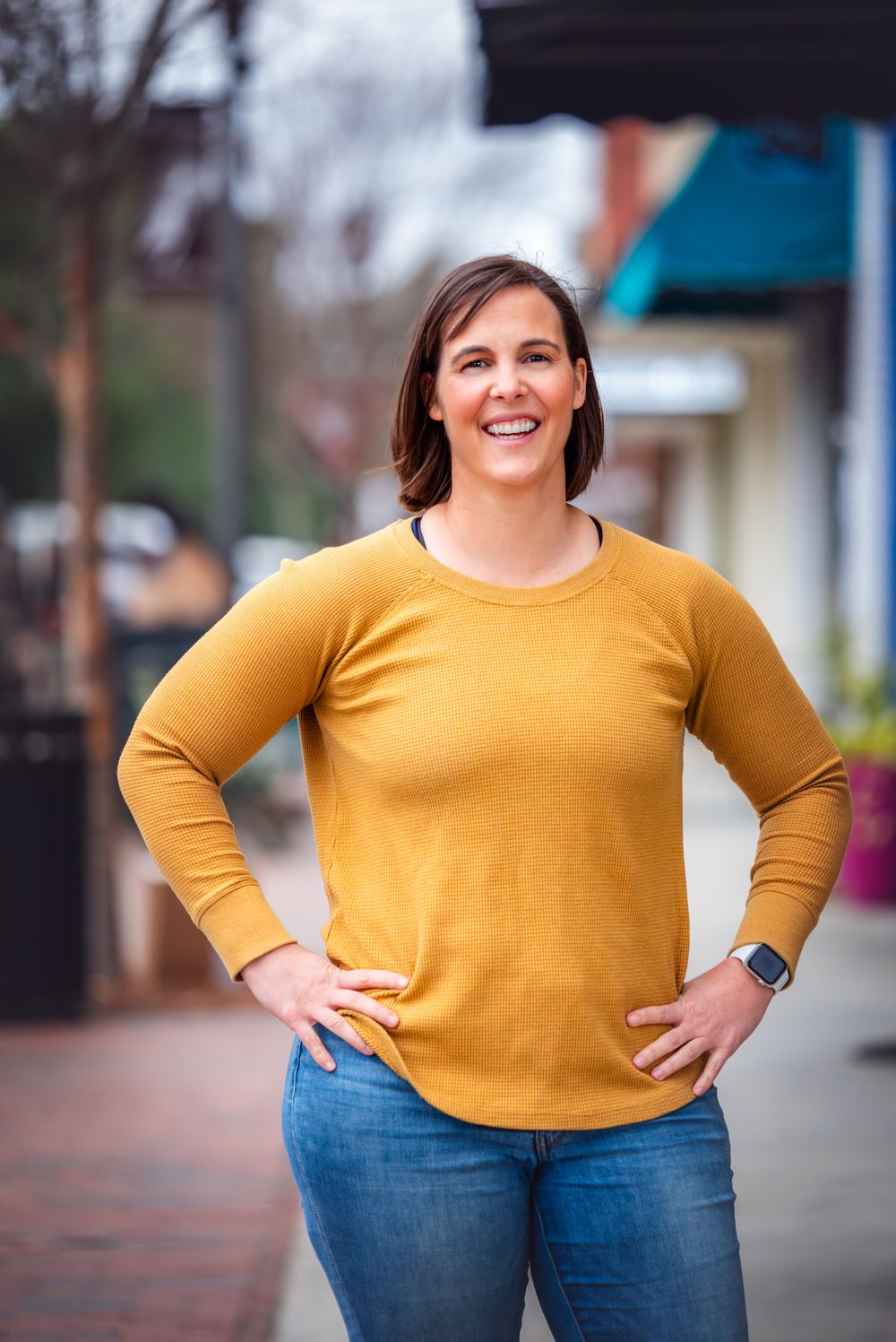
Valerie Alston
Mental Performance Coach & Resilience Expert
Valerie is a former D1 Softball player turned mental skills coach, educator and author. Since 2008 she’s trained thousands of Soldiers to be at their best when it matters the most with sport psychology and resilience skills. Valerie uses her deep understanding of the psychology of success to help athletes get amazing results while also working with parents and coaches to reinforce the skills and create stronger relationships with their kids/athletes.
She passionately wants to help young people build the mental health and wellness (mental toughness) they need to thrive in sport and life.
She has a Master's Degree in Mental Health/Sport Psychology from Boston University is a Certified Mental Performance Consultant with the Association of Applied Sport Psychology.
Featured in Brainz Magazine

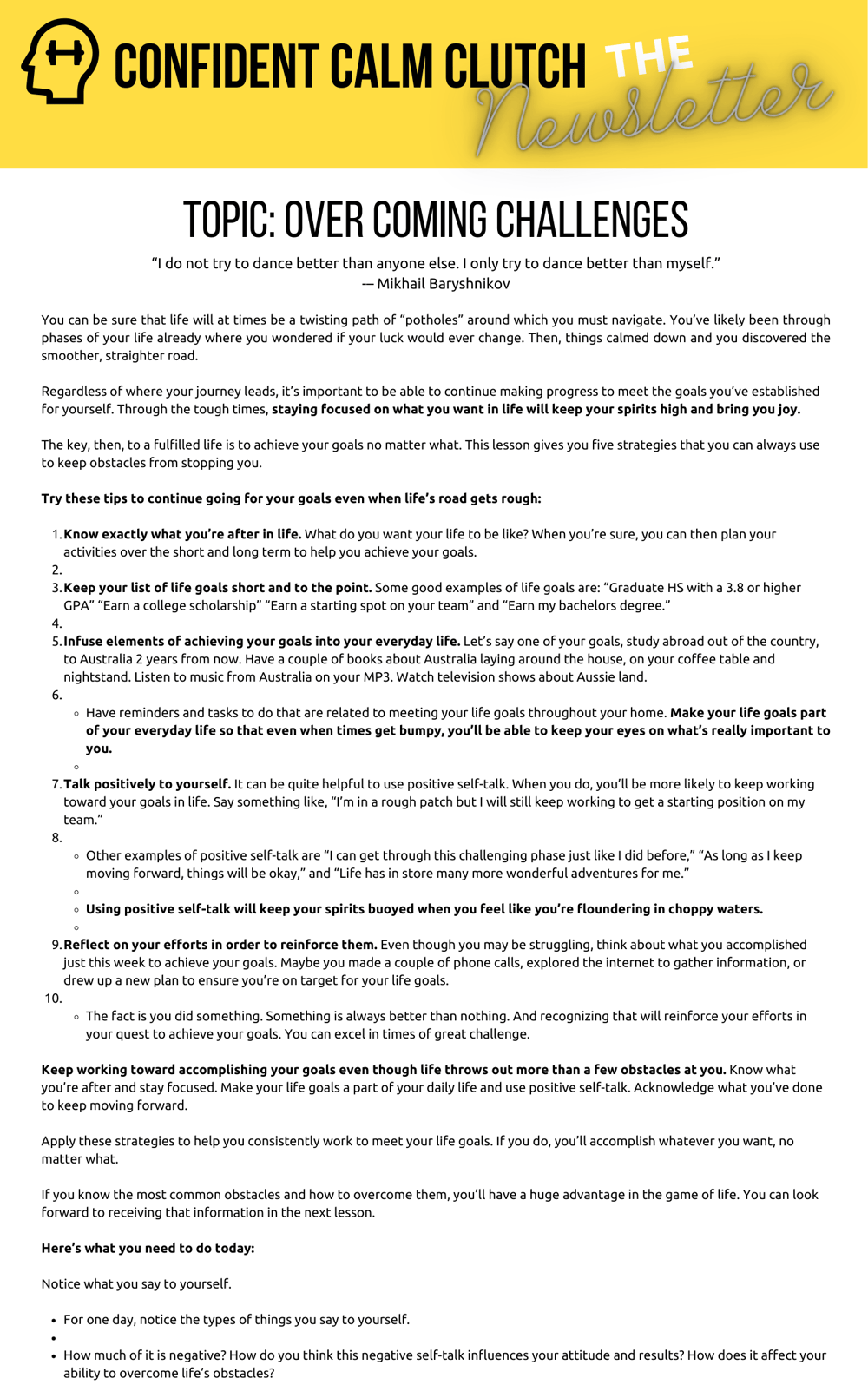
Join Our Newsletter/Mailing List Today!
What Every Parent and Coach Needs To Grasp About How to...
Supercharge your Athlete's Mental Toughness Weekly Breakthroughs with the Confident Calm & Clutch Newsletter. Transform your athletes ability to thrive & succeed in sport and life in just 10 minutes a day!.
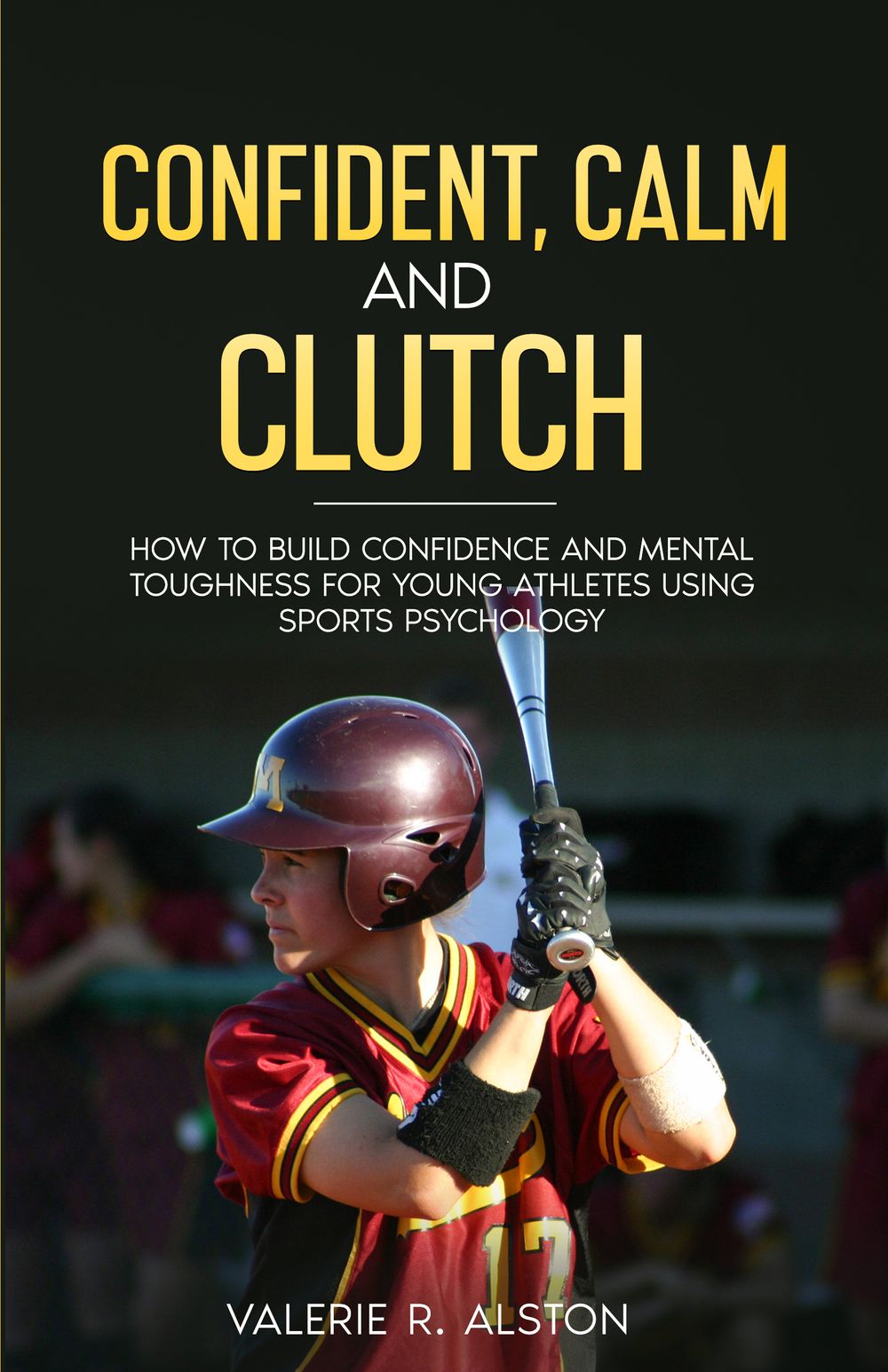
Become a confident and resilient champion with this essential guidebook on mental toughness – nourish the body by strengthening the mind!
A lack of mental toughness is the biggest enemy of athletes. It can hinder your performance, fuel self-doubt, and lead you to give up at the slightest difficulty.
Fortunately, mental toughness isn’t something you have to be born with. You can develop it through practice and dedication… so you can become more resilient and flexible and be able to challenge setbacks and turn them into breakthroughs.
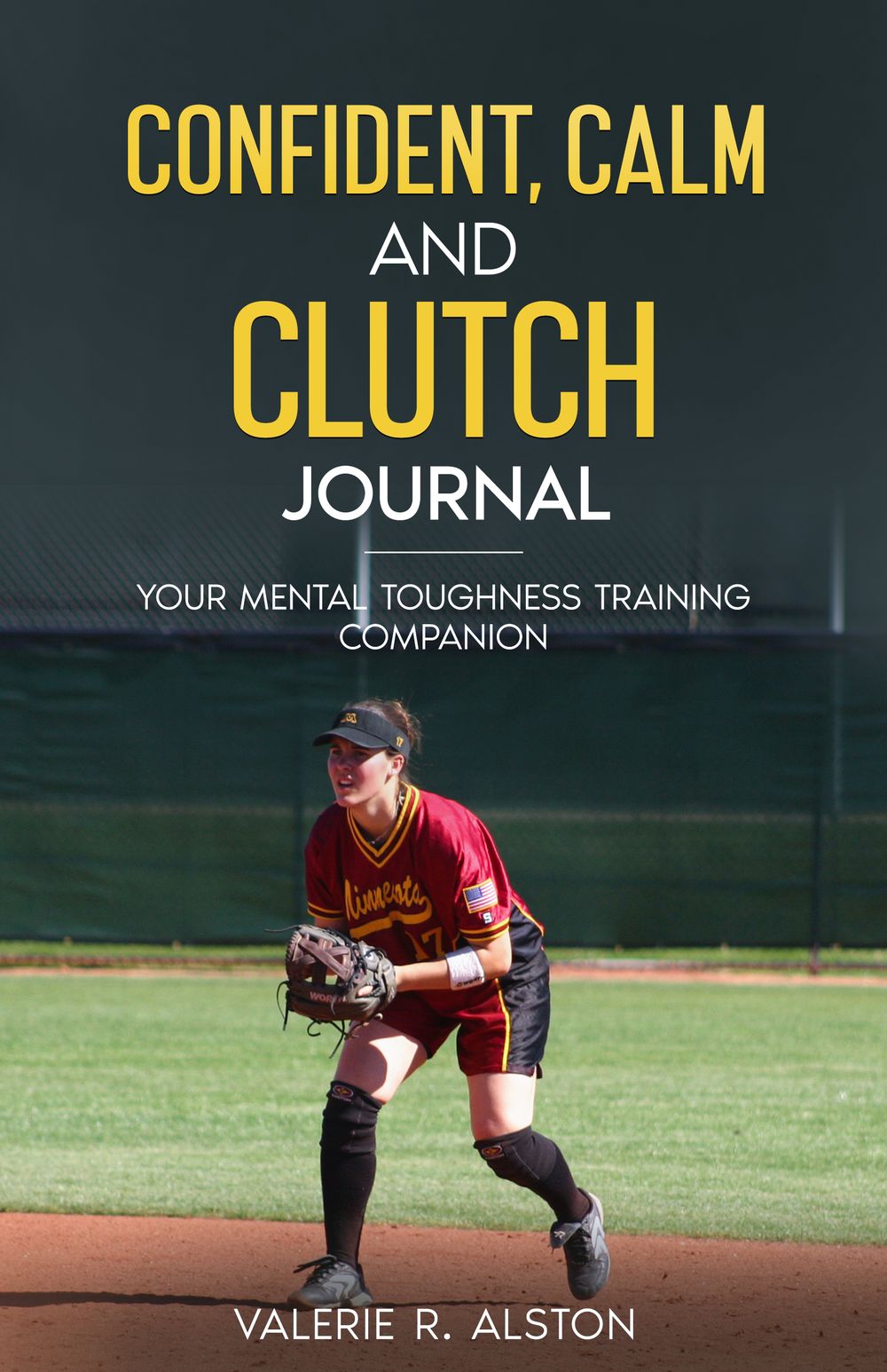
This journal is designed to help you build your self-awareness and develop the mental processes that help your performance, and discover what's getting in your way, so you can change it.
The pages give you an opportunity to rate the quality of your confidence, motivation, focus, and energy each day. This allows you to see trends over time. The notes pages allow you to reflect and free think about your experiences that day, and how your specific thoughts, emotions, and physiological states affect you and your performance.
It is a great companion to any of my training programs or to help you implement the tools in my book.
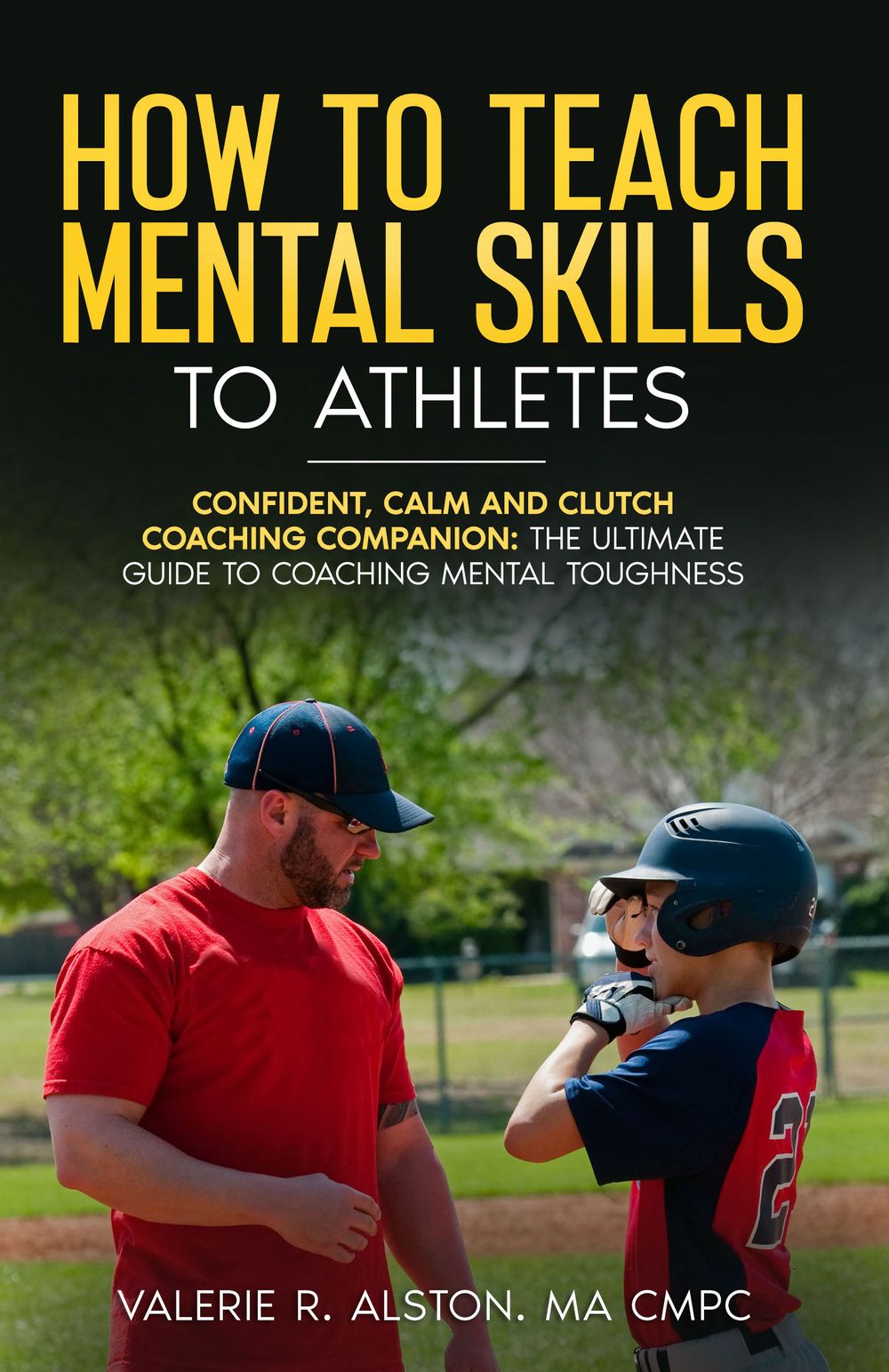
This is a companion manual for coaches who want to use Confident, Calm & Clutch with their teams or just want to learn proven strategies for building mental toughness with their teams / athletes.
No more guess work or just hoping your team develops mental toughness. Discover proven techniques and strategies for implementing deliberate mental skills training with your team.
Discover how to implement the lessons from the book into your practice plan, run a book study with your team, build an effective culture and so much more.
Get guidance and assistance from me as you go!
Services
World Class Training
On demand training delivered through the Toughness Trainer App. Online self-paced education courses that combine video instruction and activities to help you build skills in your desired area. You can utilize community features to ask questions, get support and help applying what you are learning. Some courses include group coaching.
Personal Coaching
One-on-one with Valerie Alston via Zoom. I am trained in behavior change and motivational techniques. Rather than acting as the expert and giving advice, I will create an environment that gives you permission to take the lead. I adhere to what you want, not what I think you should want. You determine your unique goals through a process of self-discovery and accountability, and I facilitate change at a pace set by you. The goal of these sessions is to give you personalized coaching and help you apply the techniques in this book to build your mental toughness..
Team Consultation and Camp Instruction
Team sessions are designed and structured to address mental barriers that the team has in their day-to-day functioning or performance. This could include team building, or mental skills instruction. If you run sports camps or clinics and would like to bring added value to your athletes I can help by including mental skills instruction at your camp/clinic.
