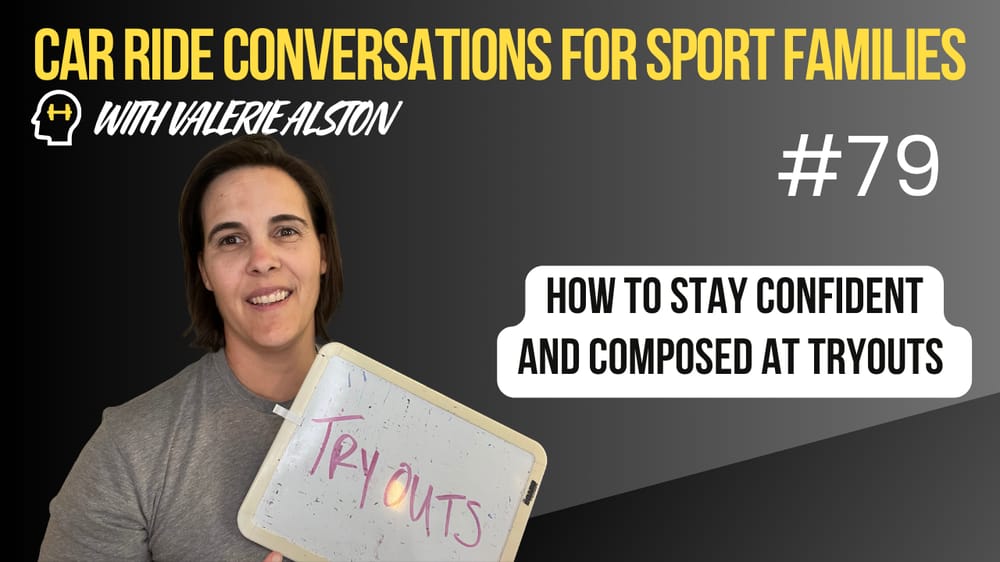
How to Stay Confident and Composed at Tryouts
Sunday, August 02, 2026
Staying Confident and Composed at Tryouts: A Guide for Athletes and Parents
Tryouts can be daunting for even the most confident athletes. As the pressure mounts, mistakes seem magnified, and the competition intense. Yet, tryouts are not about perfection but the opportunity to showcase who you are as an athlete. In this blog post, we explore effective strategies to help athletes maintain confidence, focus on controllables, recover from mistakes, and give coaches a clear picture of their potential.
Understanding Tryouts: A Mindset Shift
Tryouts are often perceived as a judgment of worth, where athletes feel the need to impress and avoid errors at all costs. This results in tension, comparison, and overthinking. Instead, consider tryouts as a chance to show what you can do under pressure. Replace the "I have to prove myself" mindset with an "I get to show myself" mindset. This shift reduces pressure and enables athletes to play more freely and authentically.
Key Strategies for Athletes
1. Focus on What You Can Control: Athletes often obsess over outcomes beyond their control, such as team selection and the coach’s preferences. Instead, concentrate on behaviors you can manage: effort, coachability, communication, body language, and how you recover from mistakes. These attributes, coupled with physical talent, demonstrate dependability and engagement to coaches.
2. Plan for Mistakes: Mistakes are inevitable. What matters is your response. When an error occurs, take a deep breath, release tension, and refocus on your current task. Demonstrating resilience and the ability to bounce back is crucial for coaches.
3. Avoid Unhealthy Comparisons: Comparing yourself negatively to others can undermine your performance. Instead, learn from your peers. Observe their skills and intensity levels, and use these insights to enhance your own game. Your focus should be on showing your best self, regardless of others’ abilities.
4. Define Personal Success: Prior to tryouts, set three process goals related to behavior you control, such as communication or effort. After tryouts, evaluate your performance based on these goals, not just the outcome (i.e., making the team).
5. Prepare Mentally: Develop a mental plan encompassing preparation, in-the-moment focus during tryouts, and reflection afterward. Visualize success and stay present during exercises, maintaining a receptive attitude toward feedback.
Advice for Parents
Parents play a pivotal role in supporting their children through tryouts. Avoid adding pressure with constant reminders of importance or guarantees of success. Encourage your child by focusing on effort and coachability. Post-tryout, ask about their feelings and learnings rather than the immediate results. This approach reinforces self-assessment based on controllables rather than outcomes.
Conclusion
The goal of tryouts is not to control the coach's decision, but to perform with confidence, adaptability, and integrity. Athletes should aim to demonstrate who they are and what they could contribute to a team. By focusing on controllables and maintaining a positive mindset, athletes can navigate tryouts with confidence and poise.
If you found these insights helpful, share this post with someone preparing for tryouts. For more tips on building confidence and mental toughness, consider joining our newsletter or connecting with @valstoncoaching on Instagram and Facebook. Let’s make those car rides count with meaningful conversations!

Hi, I Am ValErie Alston
Certified Mental Performance Consultant
Resilience Trainer and Performance Expert for the Army
Author
Former D1 Softball Player
Crossfit Enthusiast
Avid Traveler and lover of food
And Awesome Auntie!
