
Confident, Calm & Clutch
Car Ride Conversations for Sports Families Podcast
Quick, impactful talks to fuel mental toughness on the go.
About the Show
Welcome to Car Ride Conversations for Sports Families – the ultimate podcast for parents, coaches, and young athletes who want to unlock the secrets to mental toughness, confidence, and resilience. Whether you're on your way to practice, a big game, or just tackling the daily grind, these bite-sized episodes are designed to spark meaningful conversations and equip young athletes with actionable tools to thrive in school, sports and life.
Hosted by Valerie Alston, former D1 athlete, sport psychology expert, and resilience coach, each episode dives into key topics like building self-belief, staying calm under pressure, and bouncing back from setbacks. With real-life stories, practical tips, and relatable insights, you'll discover how to support your athlete's journey while strengthening your connection along the way.
Buckle up and join us for a ride full of inspiration, growth, and the skills needed to become Confident, Calm, and Clutch!
*Conversations are probably best suited for middle school aged children and up, but you can easily adapt questions for younger elementary aged children.
So why a podcast like this?
Here’s the thing: kids today face a lot of pressure. Whether it’s school, sports, or social life, the challenges can feel overwhelming. And as parents, we want to help, but it’s not always easy to know how. What do we say? How do we start?
This is where Car Ride Conversations for Sports Families comes in. Each episode introduces an important topic—like mental toughness, handling pressure, or building resilience. I’ll explain why the topic matters, and then I’ll give you a few simple, open-ended questions to discuss with your athlete.
But there’s another reason this podcast matters so much to me. Back when I was growing up, we didn’t have the kind of technology kids have today. Car rides were where my family and I often had our best conversations. We’d rock out to good music, observe the world around us, and just talk. In particular, the drives to and from sports were some of my favorite times. Playing travel softball often meant 40- to 60-minute drives, and those moments with my dad, talking about strategy, sportsmanship, tactics, and life lessons, became some of my most cherished memories. They were also some of the most meaningful discussions I’ve ever had.
Today’s generation is so often sucked into technology—phones, tablets, and screens—that they’re missing out on these incredible opportunities to grow and connect. This podcast is my way of helping parents and kids reclaim that time. Let’s use car rides to have fun, spark meaningful dialogue, and build the kind of relationships that truly last a lifetime.
.
Two contrasting 2026 Winter Olympics free skate finals to explore how mindset shapes performance and the experience of competing. She discusses Ilia Malinin entering as the heavy favorite, describing overwhelming attention, internal nerves, and pressure that contributed to a poor free skate and a drop to eighth place. In contrast, Alysa Liu returned after retiring for two years due to burnout, spending time in college classes, hiking, skiing, and reconnecting with life outside skating; she came back skating for joy and artistic expression, choosing her music, choreography, and costume design, and delivering a gold medal performance with what commentators called “California Calm.” Valerie explains the difference between performing for external approval and outcomes versus performing for love of the game, and how tying identity and self-worth to results can create anxiety and overthinking that disrupts automatic skills. She encourages athletes and parents to build a healthier performance mindset by developing interests and relationships outside sport, remembering that results don’t define personal worth, and intentionally reconnecting to joy when nerves rise.
Explore how athletes manage pressure during the Winter Olympics. She discusses why pressure itself isn't the enemy and how interpreting it differently can determine success. Valerie offers insights on mental toughness, resilience, and confidence, with specific examples from Olympic athletes. She provides conversation prompts for parents and young athletes to discuss how to handle high-pressure situations effectively. Tune in for advice on harnessing nerves and focusing on performance rather than outcomes.
In this episode of 'Car Ride Conversations for Sports Families,' host Valerie Alston offers a preview of her new podcast 'The Clutch Academy.' This clip features Jack Smithlin, a coach with over 50 years of experience and an unbeaten record, discussing what it means for athletes to be confident, calm, and clutch. He shares insights on building mental performance, grit, and redefining success to foster resilience and love for the game. Whether you're a parent or a coach, learn valuable strategies to help athletes perform under pressure. Don't miss out on more tips and updates on 'The Clutch Academy' by subscribing to the newsletter!
This week on Car Ride Conversations for Sports Families, host Valerie Alston shares a personal story about dealing with unexpected snowfall in the South and its parallels to sports challenges. Valerie discusses adaptability, problem-solving, and maintaining humor under pressure. She relates her snow day experience to athletes needing to adjust to adverse conditions and unplanned situations. Listen in for meaningful dialogue about resilience, mental toughness, and confidence-building while exploring engaging conversation starters for parents and young athletes. This episode is perfect for families looking to build stronger relationships and lifelong skills, one car ride at a time.
In this episode of 'Car Ride Conversations for Sports Families,' host Valerie Alston discusses the importance of making good habits satisfying to ensure they stick, especially for young athletes. Valerie explores the principles behind behavior change, as detailed in James Clear's book 'Atomic Habits,' emphasizing the Fourth Law of Behavior Change: make good habits satisfying and bad habits unsatisfying. She provides actionable strategies for parents and coaches to help young athletes pair behaviors with rewarding outcomes, track progress, and create immediate satisfaction to foster long-term behavior change. Valerie also shares practical tips for using habit trackers and gamification to maintain motivation and consistency. Don't miss out on valuable insights into building stronger relationships, promoting mental toughness, resilience, and confidence in young athletes.
In this episode of Car Ride Conversations for Sports Families, host Valerie Alston explores how to make big goals attainable by shrinking habits to ensure they stick. Drawing inspiration from 'Atomic Habits' by James Clear, Valerie discusses the importance of making good habits easy to start and emphasizes the value of consistency over perfection. She offers actionable advice on breaking down daunting tasks into manageable steps, piggybacking new habits on existing ones, and making bad habits harder to start. Ideal for parents and young athletes, this podcast aims to foster mental toughness, resilience, and confidence through practical, everyday conversations.
Join host Valerie Alston on this episode of Car Ride Conversations for Sports Families as she dives into the science of habit formation and motivation. Learn how to connect habits to purpose, enjoyment, and identity, and discover practical tips from James Clear's book, 'Atomic Habits.' Valerie discusses the dopamine feedback loop, temptation bundling, and surrounding yourself with the right influences to build effective habits. Ideal for parents and young athletes aiming to improve mental toughness, resilience, and confidence, this conversation will help you build stronger relationships and lifelong skills. Tune in for actionable advice on making habits stick and avoiding negative behaviors. Don't forget to like, share, and subscribe for more insightful discussions!
In this episode of Car Ride Conversations for Sports Families, host Valerie Alston discusses the importance of habit formation over motivation for achieving long-term goals. She dives into the science of habit formation and shares practical tips on building effective habits for athletes and their families. Valerie highlights the significance of making good habits obvious and bad habits invisible. She provides actionable strategies, inspired by James Clear's 'Atomic Habits,' for creating an environment conducive to achieving goals. Valerie also prompts listeners to engage in meaningful family conversations about identifying and implementing new habits. Join the conversation for insights on building mental toughness, resilience, and confidence while fostering stronger family relationships. Don't forget to share this episode and subscribe to Valerie's newsletter for more tips.
Every athlete experiences slumps—periods where performance doesn't meet expectations. In this episode of Car Ride Conversations for Sports Families, host Valerie Alston explores the nature of slumps, why they occur, and how to overcome them. Valerie shares her personal story of switching to left-handed hitting in softball and the growth that came from this challenging season. Learn about the importance of going back to basics, focusing on controllables, and maintaining a curious mindset. This episode provides practical advice for young athletes and their parents on how to navigate these tough periods and ultimately emerge stronger. Tune in for valuable tips on building mental toughness, resilience, and confidence. Remember to subscribe and share if you find this episode helpful!
Failure isn't the enemy; it's the best teammate you can have. In this episode of Car Ride Conversations for Sports Families, host Valerie Alston discusses the importance of embracing failure as part of the growth process for athletes. Valerie explains how a growth mindset, where athletes view their abilities as improvable with effort and practice, can transform failures into learning opportunities. She contrasts this with a fixed mindset, where abilities are viewed as static, and emphasizes the importance of redefining success beyond just wins and stats. The episode also provides practical tips for fostering a growth mindset, setting tangible goals, and redefining success. Conversation prompts are provided to encourage meaningful dialogue between parents and young athletes about mental toughness, resilience, and confidence.
Join host Valerie Alston in this insightful episode of 'Car Ride Conversations for Sports Families,' where she introduces the 24-hour rule to help athletes move past their performances—both good and bad. Learn how to use an effective post-performance review process to build confidence, stay motivated, and focus on future growth. Valerie discusses the importance of experiencing emotions, transitioning to evaluation, and finally, taking action. Explore five key areas to reflect on after every game or practice: competence builders, confidence builders, goal review, mental game plan, and game strategy. Whether you're a parent or an athlete, understand how to make these reflections a quick habit and explore practical examples. Subscribe, share, and take your athletic performance to the next level!
In this special Thanksgiving episode, we explore the power of expressing gratitude out loud to deepen relationships and turn appreciation into action. Valerie shares practical tips for sparking meaningful conversations about gratitude at the Thanksgiving table and beyond, along with insights from her extensive experience teaching resilience to Army soldiers. Tune in to learn how to make gratitude a lasting practice in your family, hear conversation prompts to use during the holiday, and get motivated to keep the gratitude practice alive year-round. Join us for an episode full of heartfelt stories, valuable lessons, and actionable ideas to enhance your family's connection and wellbeing. Happy Thanksgiving!
Discover how gratitude can be a powerful tool for mental toughness and performance in sports In this episode of Car Ride Conversations for Sports Families, host Valerie Alston delves into the concept of mental toughness and emphasizes the importance of gratitude as a powerful performance tool. Valerie explains how practicing gratitude can enhance happiness, stress management, resilience, and overall mental toughness. She introduces a simple yet effective gratitude practice called the 'Three Good Things' exercise, which involves noticing and reflecting on good things daily. Valerie provides scientific insights on why gratitude matters and offers practical tips for incorporating it into daily life, specifically for young athletes and their families. The episode concludes with a series of thought-provoking questions designed to spark meaningful conversations and encourage ongoing gratitude practices within families.
In the final part of our series, host Valerie Alston engages in a deep conversation with Justin about the You Matter Ankeny Classic, a unique softball tournament focused on mental health and sportsmanship. Justin shares how he brought together counselors, coaches, and athletes to create an event that emphasizes character over competition. This episode of Car Ride Conversations for Sports Families explores the importance of mental health in sports and offers actionable insights for communities looking to replicate this impactful model. With discussion prompts and tips for parents, this episode is a must-listen for anyone interested in youth sports and mental wellness.
In this episode of Car Ride Conversations for Sports Families, host Valerie Alston continues her discussion with Justin Bogers, a board member of the American Foundation for Suicide Prevention. They explore the critical role sports play in fostering youth mental health and wellness. Topics covered include current trends in youth mental health, the importance of a supportive sports environment, goal setting, visualization, and resilience-building techniques. Valerie and Justin share practical strategies for coaches and parents to help young athletes build confidence, calm, and resilience. Tune in for valuable insights on creating a positive, growth-oriented sports culture and engaging conversational prompts for sports families.
Join Valerie Alston and special guest Justin Bogers, a dad, coach, and board member for the American Foundation for Suicide Prevention, in this insightful episode of Car Ride Conversations for Sports Families. Explore the highs and lows of youth sports, focusing on building character, mental health, and sportsmanship. Hear an eye-opening story about a post-game handshake gone wrong and learn valuable lessons on emotional control for coaches, parents, and players. Tune in for actionable tips, heartfelt stories, and meaningful conversations to help young athletes grow both on and off the field. Stay tuned till the end for discussion prompts and information on the You Matter Ankeny Classic for Mental Health softball tournament.
How to Utilize the Podcast
As a Parent:
Simply pick an episode on a topic you are curious about and listen. You can listen to all of the questions first, then have a discussion or you can pause after each individual question to have conversation. Each episode is between 9-15 min so that are quick but hopefully the conversation is not!
As A Coach
Pick a topic you think your team needs to learn about. Have them listen to the episode in some way then you facilitate the conversation at practice in some way. It is highly recommended to involve the parents too!
- Option 1: Have athletes listen to the episode prior to practice (perhaps on the drive to practice so it is fresh), then facilitate the discussion questions at some point in practice (before, during, after depending on the topic) and how it might best fit.
- Option 2: Have athletes listen to the episode prior to practice and having the discussion with their parents. Then require them to journal or capture what their biggest lesson learn was and how they will apply that in practice. This could potentially be something they share at the beginning of practice.
- Option 3: Listen live at practice and lead the conversation as a coach instead of parent. You should be part of the conversations adding dialogue as the coach. Tweak any questions that are too parent specific to be more coach relevant. Consider breaking the team into small 4-5 person groups to discuss first, then share bigger lessons learned with the whole group.
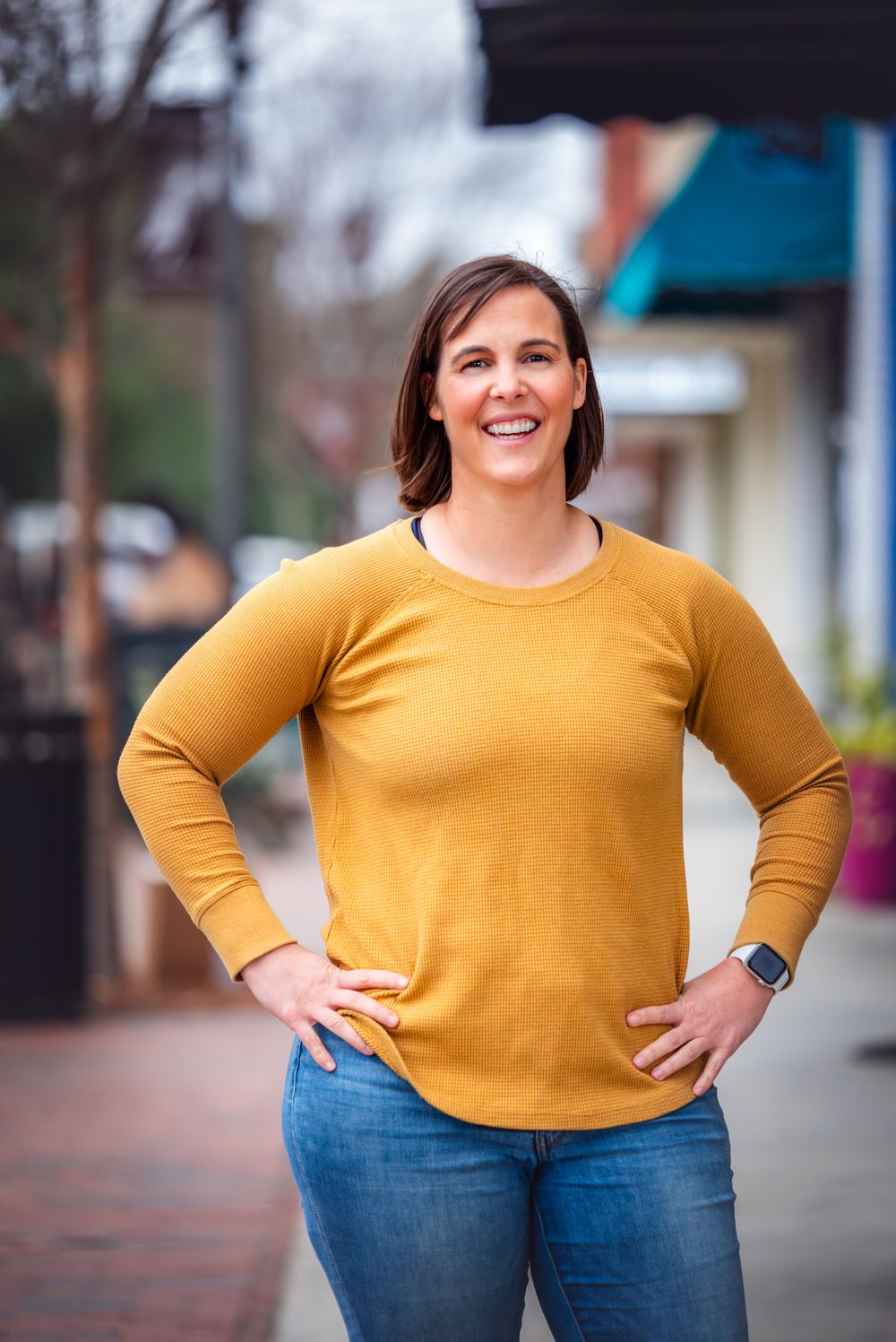
Meet the Host
Valerie Alston
Mental Performance Coach & Resilience Expert
Valerie is a former D1 Softball player turned mental skills coach, educator and author. Since 2008 she’s trained thousands of Soldiers to be at their best when it matters the most with sport psychology and resilience skills. Valerie uses her deep understanding of the psychology of success to help athletes get amazing results while also working with parents and coaches to reinforce the skills and create stronger relationships with their kids/athletes.
She passionately wants to help young people build the mental health and wellness (mental toughness) they need to thrive in sport and life.
She has a Master's Degree in Mental Health/Sport Psychology from Boston University is a Certified Mental Performance Consultant with the Association of Applied Sport Psychology.
Featured in Brainz Magazine

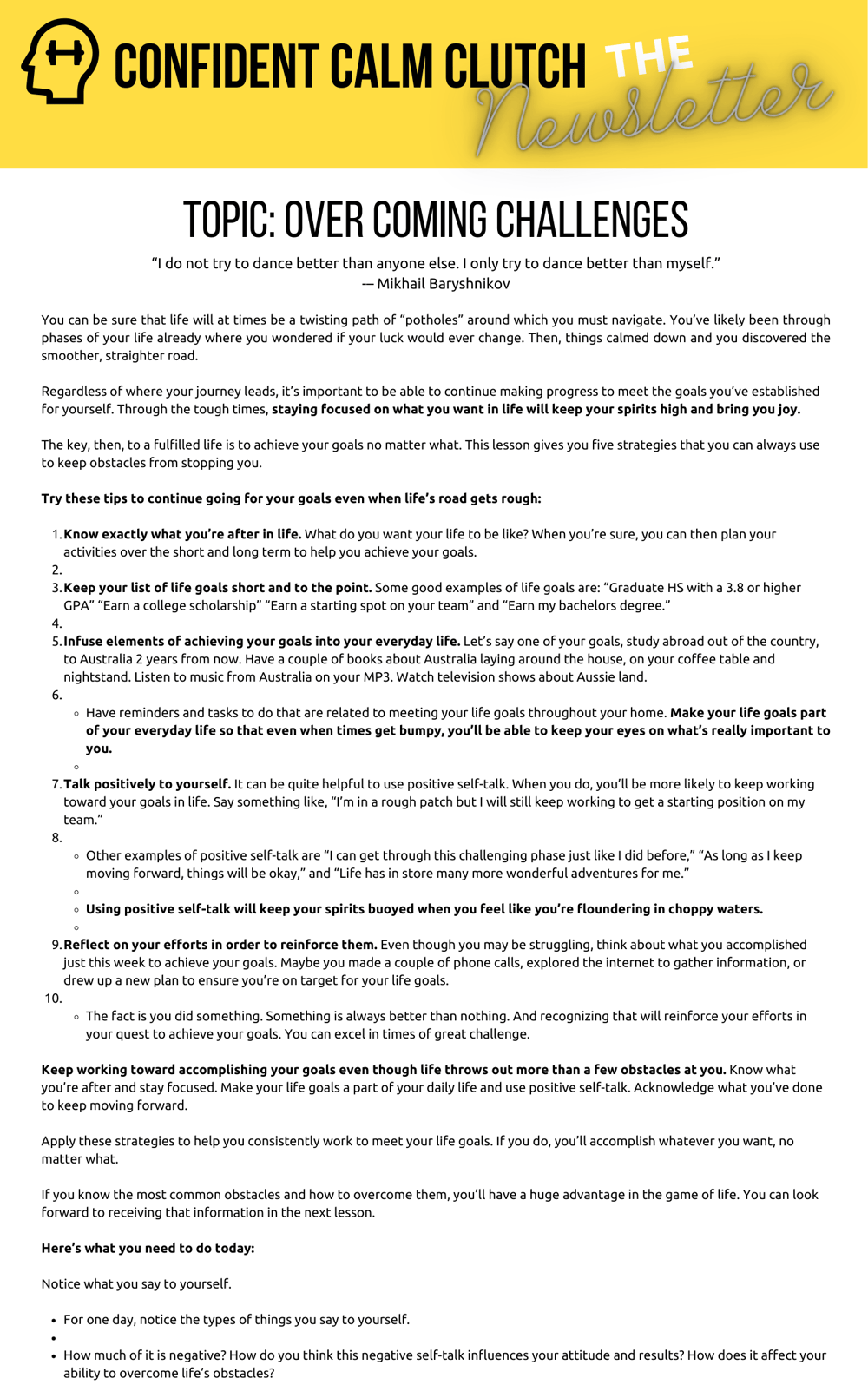
Join Our Newsletter/Mailing List Today!
What Every Parent and Coach Needs To Grasp About How to...
Supercharge your Athlete's Mental Toughness Weekly Breakthroughs with the Confident Calm & Clutch Newsletter. Transform your athletes ability to thrive & succeed in sport and life in just 10 minutes a day!.
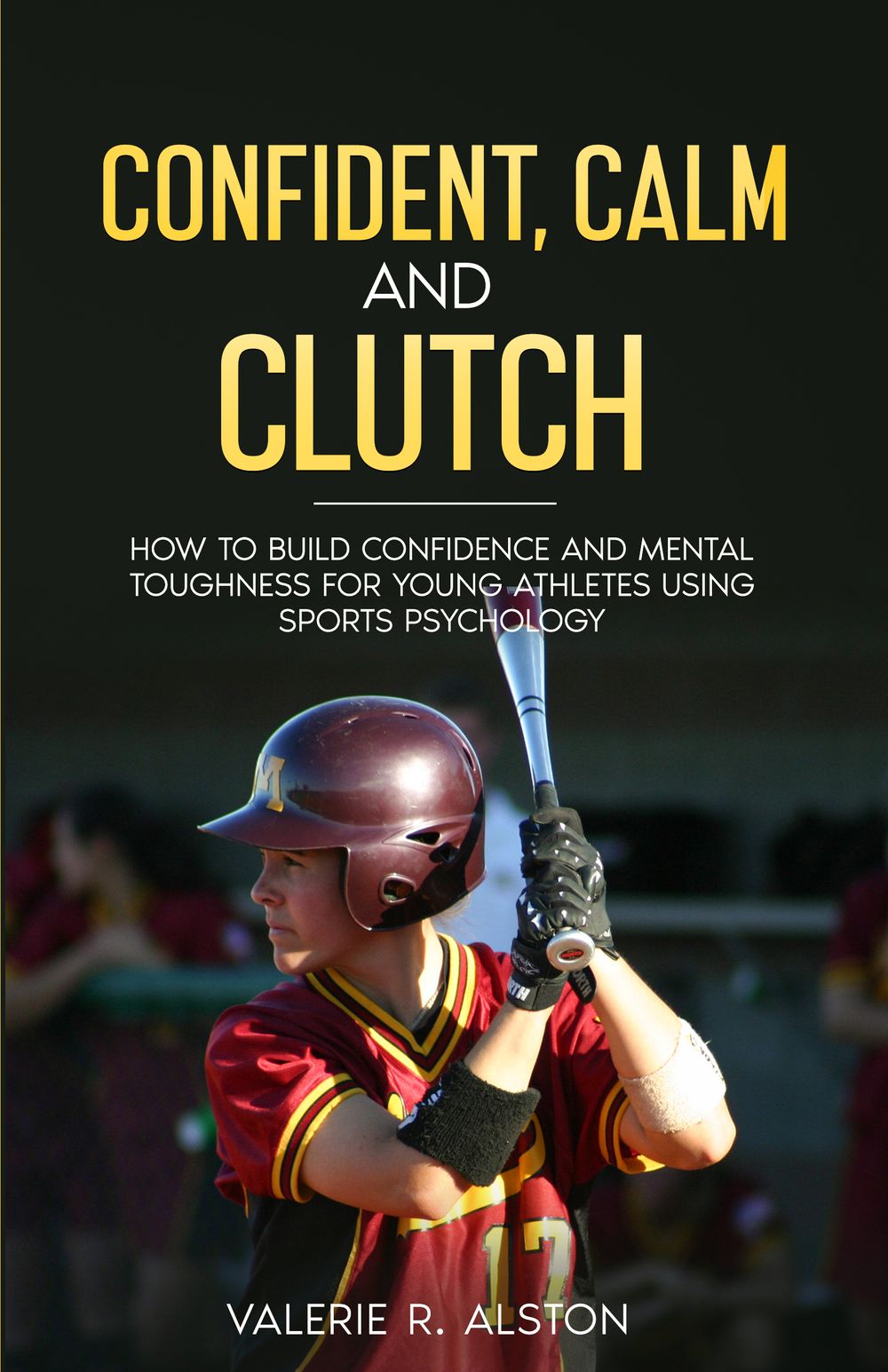
Become a confident and resilient champion with this essential guidebook on mental toughness – nourish the body by strengthening the mind!
A lack of mental toughness is the biggest enemy of athletes. It can hinder your performance, fuel self-doubt, and lead you to give up at the slightest difficulty.
Fortunately, mental toughness isn’t something you have to be born with. You can develop it through practice and dedication… so you can become more resilient and flexible and be able to challenge setbacks and turn them into breakthroughs.
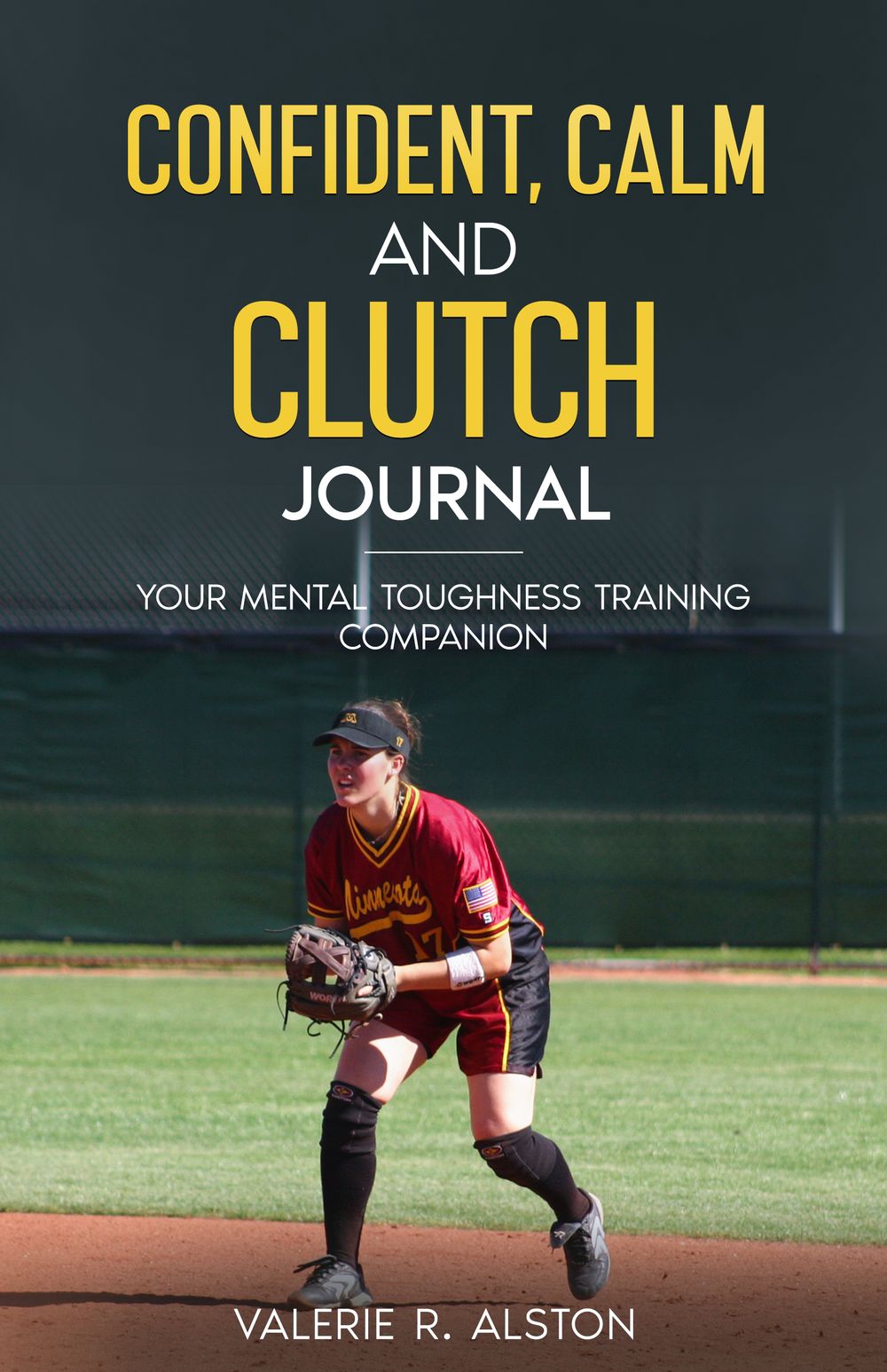
This journal is designed to help you build your self-awareness and develop the mental processes that help your performance, and discover what's getting in your way, so you can change it.
The pages give you an opportunity to rate the quality of your confidence, motivation, focus, and energy each day. This allows you to see trends over time. The notes pages allow you to reflect and free think about your experiences that day, and how your specific thoughts, emotions, and physiological states affect you and your performance.
It is a great companion to any of my training programs or to help you implement the tools in my book.
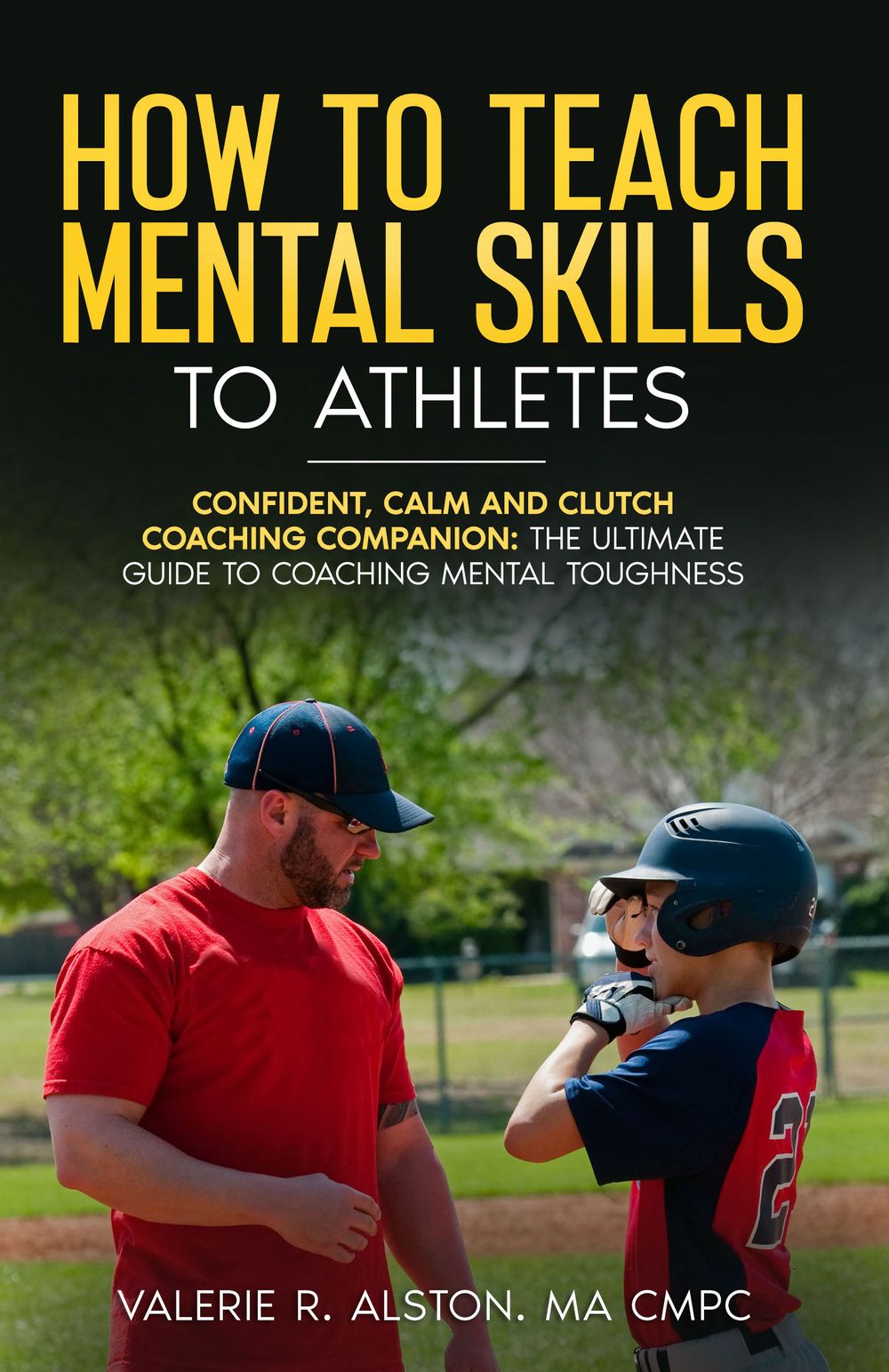
This is a companion manual for coaches who want to use Confident, Calm & Clutch with their teams or just want to learn proven strategies for building mental toughness with their teams / athletes.
No more guess work or just hoping your team develops mental toughness. Discover proven techniques and strategies for implementing deliberate mental skills training with your team.
Discover how to implement the lessons from the book into your practice plan, run a book study with your team, build an effective culture and so much more.
Get guidance and assistance from me as you go!
Services
World Class Training
On demand training delivered through the Toughness Trainer App. Online self-paced education courses that combine video instruction and activities to help you build skills in your desired area. You can utilize community features to ask questions, get support and help applying what you are learning. Some courses include group coaching.
Personal Coaching
One-on-one with Valerie Alston via Zoom. I am trained in behavior change and motivational techniques. Rather than acting as the expert and giving advice, I will create an environment that gives you permission to take the lead. I adhere to what you want, not what I think you should want. You determine your unique goals through a process of self-discovery and accountability, and I facilitate change at a pace set by you. The goal of these sessions is to give you personalized coaching and help you apply the techniques in this book to build your mental toughness..
Team Consultation and Camp Instruction
Team sessions are designed and structured to address mental barriers that the team has in their day-to-day functioning or performance. This could include team building, or mental skills instruction. If you run sports camps or clinics and would like to bring added value to your athletes I can help by including mental skills instruction at your camp/clinic.
