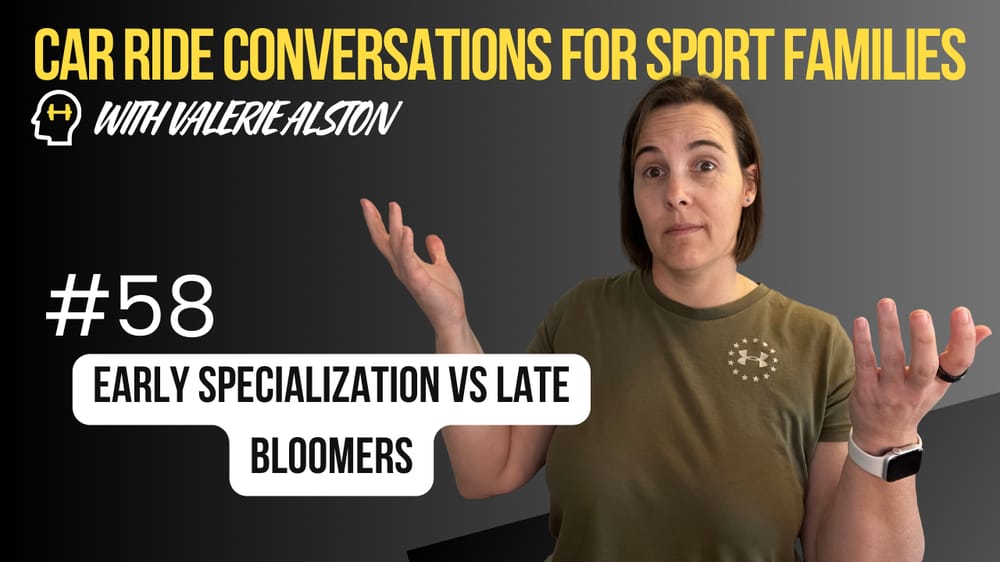
Early Specialization vs Late Bloomers: What Sweden’s Soccer Research Reveals About the Real Path to Elite Success
Sunday, March 22, 2026
Embracing the Path Less Traveled: Rethinking Early Specialization in Youth Sports
In the world of youth sports, a common narrative is that early specialization is the key to future success. However, research is increasingly challenging this myth. In a recent episode of "Car Ride Conversations for Sports Families," host Valerie Alston explores this topic using insights from Steve Magnusson's research in Sweden. The results not only question conventional beliefs but also offer hope to athletes, parents, and coaches feeling the pressures of early performance.
Challenging the Conventional Path
Imagine being told that a third of Sweden's national soccer players were once not considered elite and some even skipped youth national teams entirely. This revelation serves as the basis for today's conversation, challenging the notion that early greatness is a necessity for long-term success.
Whether you're a parent, an athlete, or a coach, this discussion might just shift how you view the path to elite performance. Contrary to popular belief, development is not a linear process. Late bloomers often prove to be the longest-lasting players.
The Swedish Approach to Player Development
The research, shared by Magnusson, examined Sweden's system of youth development. It revealed three distinct pathways for players reaching national teams. Some debuted between U15 and U16, others between U17 and U18, and a remarkable 33% only reached the national level by U21 or directly joined the senior team.
Notably, 12% of Sweden's senior internationals had no junior international experience. This data highlights that elite pathways are dynamic, nonlinear, and highly individualized. The findings suggest that starting in top academies offers no significant advantage.
Rethinking Talent and Success
The assumption that early success equates to a sustained career is being debunked. Players who started early didn't necessarily enjoy longer careers than those who debuted later. The analysis emphasized that early recognition and specialization aren't prerequisites for success. Instead, factors like passion, drive, and resilience play critical roles.
Character development, maturity, and personal growth significantly influence athletic success. The so-called late bloomers often have to work harder initially, which instills better habits and work ethic necessary for elite levels.
A New Perspective for Youth Sports
Today, the emphasis on early achievement can lead to burnout, as well as discourage those who develop later. The focus should shift from immediate performance to fostering a supportive environment for growth, learning, and character development.
Here's what can be taken from the Swedish model:
- Embrace Individual Timelines: Every young athlete develops uniquely, making it vital to support rather than pressure them to conform to a one-size-fits-all timeline.
- Encourage Holistic Growth: Prioritize community, friendship, learning, and resilience over rankings and scholarships.
- Foster a Safe Environment: Create spaces where young athletes can try, fail, and learn without dire consequences.
Discussion Points for Families
1. Assessing Pressures: Do young athletes feel pressured to stay ahead? Where does this pressure originate, and how can it be alleviated?
2. Skills for Long-Term Success: If early achievements don’t guarantee success, what skills or attributes matter more as athletes grow?
3. Redefining Success in Sports: How would focusing on building character and resilience change a young athlete's experience?
4. Vision for the Future: What aspirations do young athletes have, and what steps can be taken today to bridge the gap towards these visions?
Conclusion
As we reconsider the age-old belief in early specialization, it’s essential to focus on individual growth, passion, and the broader benefits of sports participation. By valuing diverse developmental pathways, we can help young athletes thrive not only as players but as well-rounded individuals.
For more insights and tips, subscribe to Valerie Alston’s newsletter at http://www.confidentcalmclutch.com/newsletter. You can also connect with Valerie on Facebook and Instagram @valstoncoaching for further discussions and ideas.

Hi, I Am ValErie Alston
Certified Mental Performance Consultant
Resilience Trainer and Performance Expert for the Army
Author
Former D1 Softball Player
Crossfit Enthusiast
Avid Traveler and lover of food
And Awesome Auntie!
